
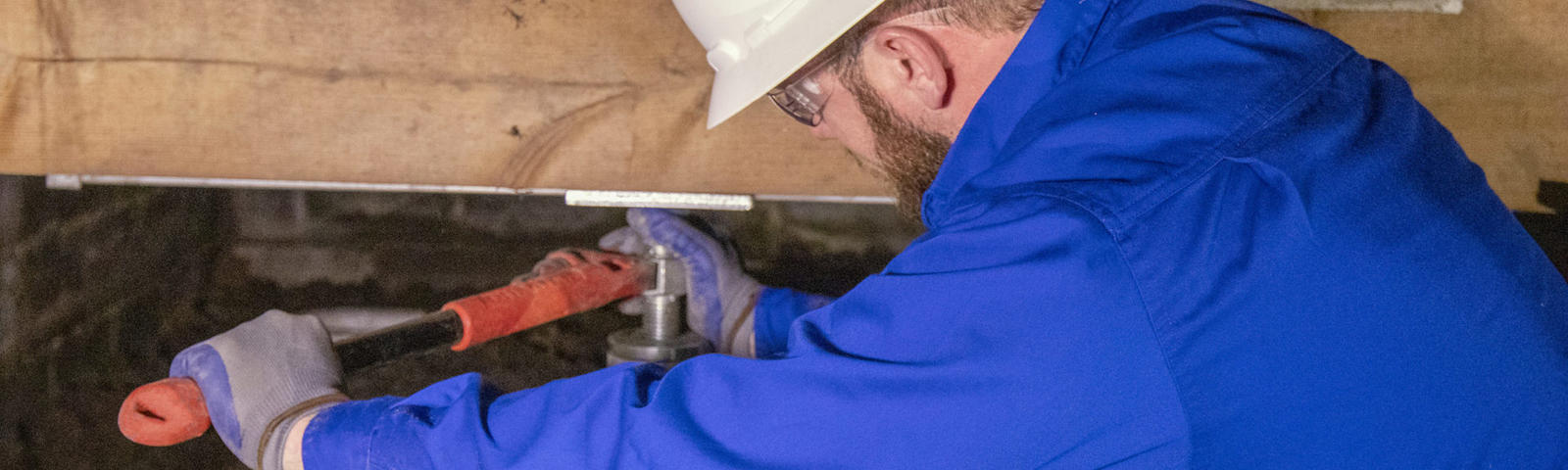
Why Is PolyRenewal™ Better Than Mudjacking?
When choosing which concrete lifting solution to go for, it’s not enough to simply choose whichever is cheapest. Between PolyRenewal™ and other methods like mudjacking, mudjacking is the cheapest concrete lifting method. At least, that’s what it seems like on the surface.
Because of all the downsides of mudjacking, the repair job isn’t reliable, and you could end up with a broken slab later down the line. Although you save up money with mudjacking for the actual repairs, you’ll end up spending more on slab replacement later. A more permanent solution like PolyRenewal™ is a better investment for homeowners who wish to only repair their slab once.
- The Disadvantages of Mudjacking
Mudjacking is one of the oldest forms of concrete lifting. It involves drilling holes and pumping in a cement mixture under the slab. Enough cement is pumped in that the pressure lifts the slab and evens it out. There are multiple problems with this method, the first one being the potential blowout from the pressure of the slurry being pumped in. This is when the slurry basically “explodes” outwards and leaves a huge mess. Another problem with mudjacking is that the hardened cement under the slab can still erode and crumble since it’s permeable and vulnerable to water and the freeze-thaw effect.
Mudjacking does not protect the soil from further erosion. It still allows water to pass through to the soil since cement is porous. The soil then softens and loosens up as it’s exposed to water, and the weight of the cement only displaces the soil further. When it comes down to it, mudjacking only lasts around ten years or so, and that’s only when the slab is heavily protected from weather-related factors.
- The Advantages of PolyRenewal™
With PolyRenewal™, contractors drill holes into the slab, but these are much smaller than the holes drilled for mudjacking. This allows contractors to work with slabs that are weak, since the drilling is minimally invasive. Instead of a cement slurry, polyurethane foam is injected into the slab. The foam expands and completely fills out any gaps in the soil; it’s the expanding polyurethane foam that lifts the slab, not pressure, so there’s no risk of blowout. The entire process is done in a few hours, and the polyurethane cures in just 15 to 30 minutes.
Polyurethane is a synthetic plastic that has no harmful additives, so it’s safe to inject underground. Because it’s plastic and impermeable, it doesn’t get affected by the freeze-thaw cycle and it never washes away once cured. Since it’s waterproof, it blocks moisture from reaching the soil, slowing down the erosion process and keeping your slab even for decades. Polyurethane is strong and can support heavy loads while still being lightweight, so soil displacement is minimal.
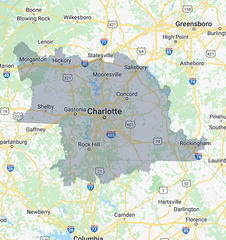
Our Locations
130 Performance Dr
Belmont, NC 28012
1312 Matthews-Mint Hill Rd.
Matthews, NC 28105