
Skip to Main Content
Stabilizer Adjustment

FAQs

Stabilizer Adjustment

Rot-Weakened Floor Joists/Girders

Because crawl spaces are often not sealed from the earth around them, excess moisture and humidity is a common problem. This moisture creates an environment where mold and rot can thrive, damaging the wood structure of your home. The weakened girders and floor joists will be unable to continue to support the weight above. In […]
Stabilizer Adjustment

Support Columns Spaced Too Far Apart

When a crawl space is built, columns made of block, brick, and even wood are located throughout the crawl space. These columns are designed to support the weight of the home above. If these columns are spaced too far apart from each other, the beams and girders may be overloaded with weight, causing them to […]

Stabilizer Adjustment

Poor Compaction of Fill Soil

During construction of a new home, layers of soil are commonly moved around or spread out to get to the desired grade level. When the home is built, footings may be deepened to extend below weak fill soils and avoid a foundation settlement issue. The slab, however, remains on the fill soils. If the fill […]

Stabilizer Adjustment

Washout of Soil Under the Slab

This is usually caused by plumbing leaks. If the plumbing leak is severe and there is a path for the water to flow through, it can wash soil out from under the slab. With a void underneath the floor, there’s nothing supporting the concrete slab anymore. In time, it begins to crack and sink downwards.

Stabilizer Adjustment

Drying & Shrinking of the Soil Under the Slab

HVAC (Heating, Venting, and Air Conditioning) systems may be installed beneath the floor slab. Over time, the ductwork can leak air, which can dry out the soil. As the soil dries and shrinks, gaps form under the floor slab, creating voids. Because the soil no longer supports the floor slab, the floor begins to crack […]

Stabilizer Adjustment

Foundation Damage

Basement walls or foundation walls are pushed out by the garage slab. At this stage, the damage caused by street creep has lead to a potentially serious foundation issue. It’s important to address this soon — before the damage becomes any more significant.

Stabilizer Adjustment

Gaps Behind The Foundation Walls

Gaps have formed behind the foundation walls on either side of the garage door as the garage slab is pushed rearward. Installing new expansion joints in the driveway and installing wall anchors will restore your foundation walls to structural stability.

Stabilizer Adjustment

Garage Wall Damage

The foundation walls on either side of the garage door are being pushed inwards by the driveway slab. This is a sign that when the concrete pavement expanded and lengthened, pushing into the concrete driveway, there was insufficient compression space within the expansion joints. The only place for the driveway slab to go was through […]

Stabilizer Adjustment

Compressed Expansion Joints

The existing expansion joint between the driveway and garage is fully compressed. Even when the joint appears wide enough at the surface, the concrete may still be in contact underneath. This means that when the street expands with heat, your driveway is being pushed into the rest of your home.

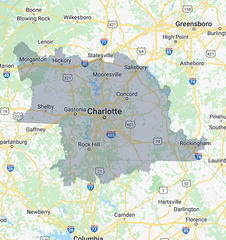
DryPro Service Map

Our Locations

Charlotte, NC

130 Performance Dr
Belmont, NC 28012

Matthews, NC

1312 Matthews-Mint Hill Rd.
Matthews, NC 28105