
How Can I Keep My Concrete Slab from Cracking?
Polyurethane foam can lift cracked slabs and level the broken piece with the rest of the concrete. That said, polyurethane is not glue, so it cannot lift slabs that are severely cracked. Past a certain point of damage, you’ll need to replace the slab instead of repairing it, which costs more money.
Besides, with a repair method like PolyRenewal™, you are able to ensure that the erosion process is slowed, and your slab stays even for a very long time. If you get a new slab, however, then the soil erosion process is not addressed, and the new slab has the potential to settle as well. To avoid this, it’s in your best interest to learn how to keep your settling concrete from cracking.
- Exposure to Moisture
The bigger the gap under the slab, the more the concrete settles and the more likely it is to break. Keeping the slab as even as possible and preventing rapid soil loss is the best way to avoid a cracked slab. This might mean making some alterations, such as not using the pool until repairs are done or using driveway covers, at least during the winter to protect from snow.
Moisture is something that not only erodes soil; it also erodes concrete. Water can displace concrete particles over time, which is especially damaging to concrete that is already weak due to a poor curing process or an incorrect recipe. Concrete damage is most severe during the winter when the moisture in the slab expands as it turns into ice. Charlotte, NC has 59 nights a year where the temperature drops to or below freezing. This is nearly two months of micro-tears from freeze-thaw, so you need to limit how much exposure to snow the slab gets if you wish to avoid cracks.
- Weight Bearing
Because concrete has poor tensile strength, it is most likely to crack when it begins settling. If you notice the tell-tale signs of settling in a slab, then you need to hold off on putting any weight on it until repairs are done. Not only does too much weight on a settling slab cause cracking, but also it can accelerate the soil erosion process.
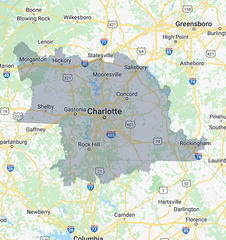
Our Locations
130 Performance Dr
Belmont, NC 28012
1312 Matthews-Mint Hill Rd.
Matthews, NC 28105